Mid-Autumn Festival: the Full-Moon Harvest of the Third Quarter
Mid-Autumn Festival falls on lunar 8/15 — the full moon of the harvest month. In 2026 it lands on September 25, inside the same week as the equinox and the Harvest Moon. The traditions, foods, and moon-viewing culture of the year's great moon festival.
The almanac learned to wait for the moon
The moon does not wait for the almanac, but the almanac learned to wait for the moon. That is the quiet reason Mid-Autumn, 中秋节, has kept its place in the Chinese calendar for so long. It is not a festival that happens to involve the moon. It is the harvest full moon made into a family occasion: lunar 8/15 is a full moon by construction, the round moon answers the round table, and the year’s first free night after the harvest becomes the year’s most family-shaped evening.
In museum halls, I have spent years among ancient plows, seed-selection tools, and irrigation models under soft gallery lighting. The objects do not speak in holidays. They speak in work: who broke the soil, who watched the sky, who stored the grain, who waited for rain, who feared frost. A festival is a calendar decision that someone’s life depended on. Mid-Autumn sits where the harvest is in and the moon lights the evening. It is a record of relief, not ornament.
Sky first, then field
Sky first, then field. The Chinese calendar names the first day of each lunar month by the new moon, so the fifteenth day is the full moon. The eighth lunar month is the harvest month for much of the old agricultural calendar, especially in the Yangtze basin and the northern plains, where autumn rice, millet, beans, sweet potatoes, persimmons, pears, lotus roots, and nuts move from field to household. When the fifteenth moon rises over that completed work, the festival is pinned to a real astronomical and agricultural fact. The date is not arbitrary. It is where the sky and the granary agree. How the lunar calendar sets the year’s seasonal festivals is its own story — two clocks reconciled over one sky — and it deserves a page of its own.
Then look at the fields. In a good year, the household has enough to pause. In a poor year, the pause is smaller, but the need is greater: people still gather because the season asks whether the family can keep its rhythm. Farming proverbs collected in northern villages often warn that late autumn weather decides the winter store. Today, during fieldwork in rural Henan, elderly farmers tell me that warming has shifted planting by nearly half a month. The old solar-term advice still matters, but it must be re-read against a moving sky. Mid-Autumn, then, is not a museum fossil. It is living time, still open to correction.
A lamp over the end of labor
The mechanics of moon-viewing are also practical. Near the autumn equinox, the full moon rises soon after sunset and climbs bright through the early evening — this is the week the almanac calls the Harvest Moon, and the sky mechanics of why its rise compresses near the equinox belong to that note. In northern latitudes, this is the season when the harvest moon’s light can extend usable evening hours without forcing people to sit in darkness. For a farming household, that light is not decoration. It is the difference between finishing work indoors and gathering outside with children, elders, fruit, tea, and talk. The moon becomes a lamp hung over the end of labor.
Roundness is a sharing instrument
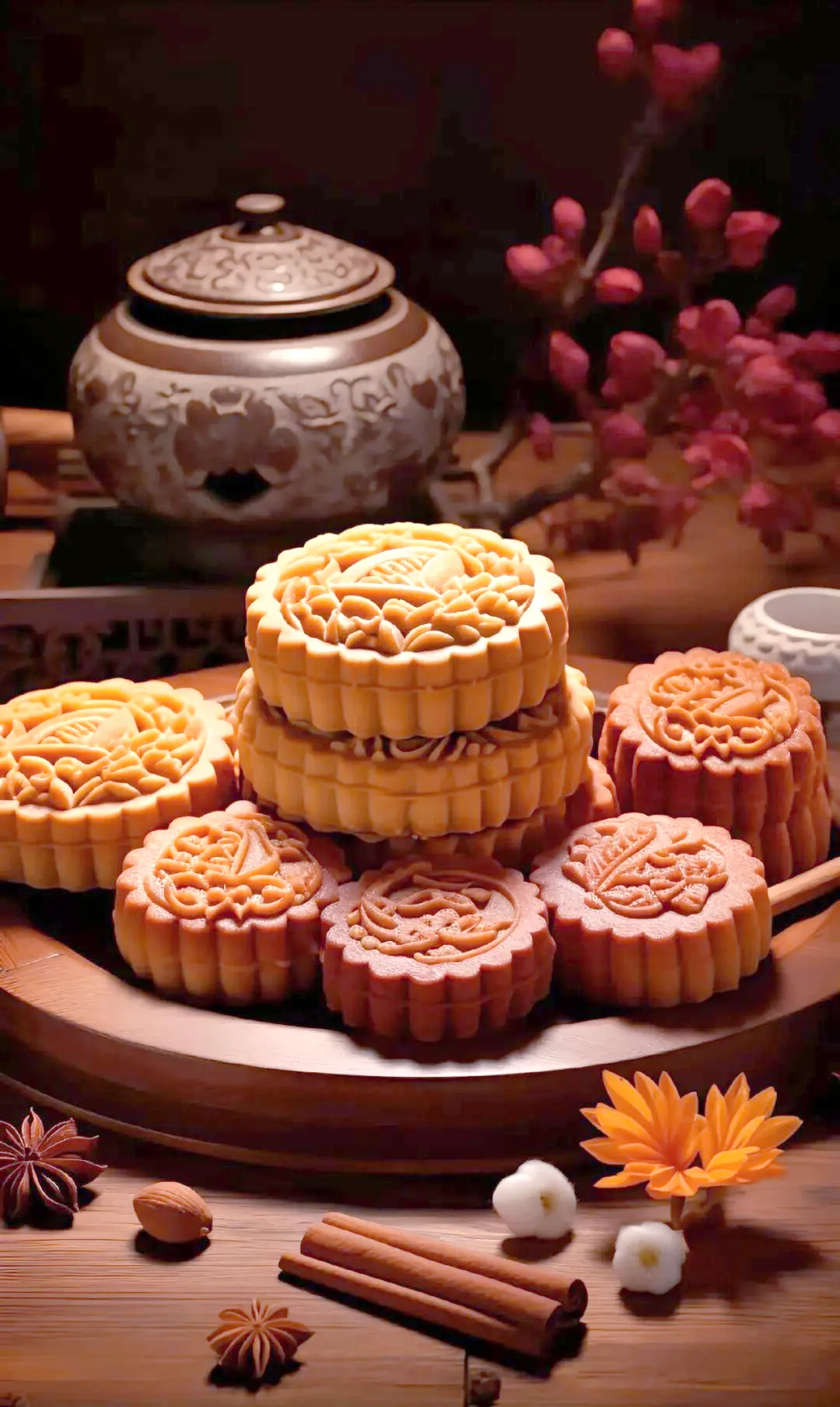
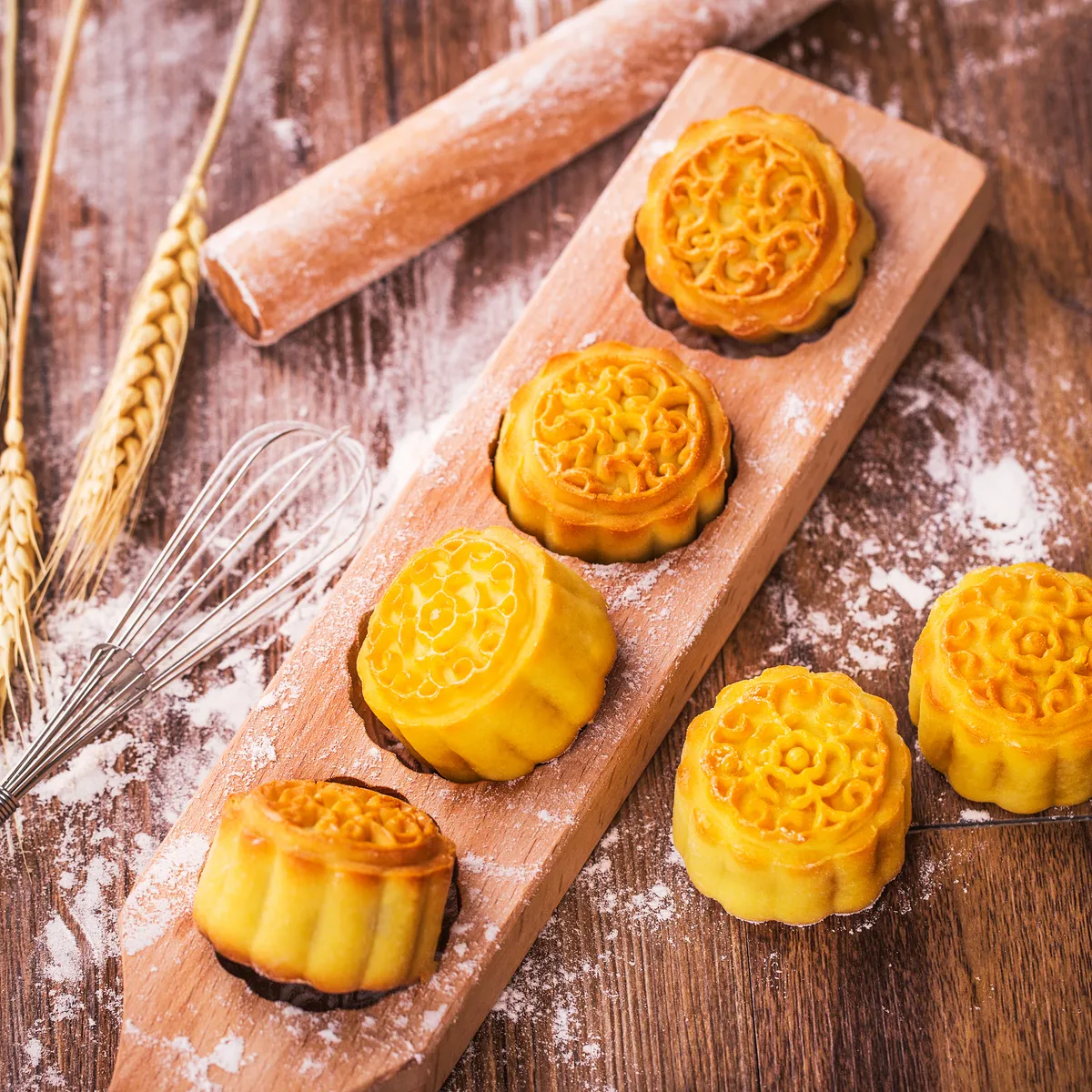
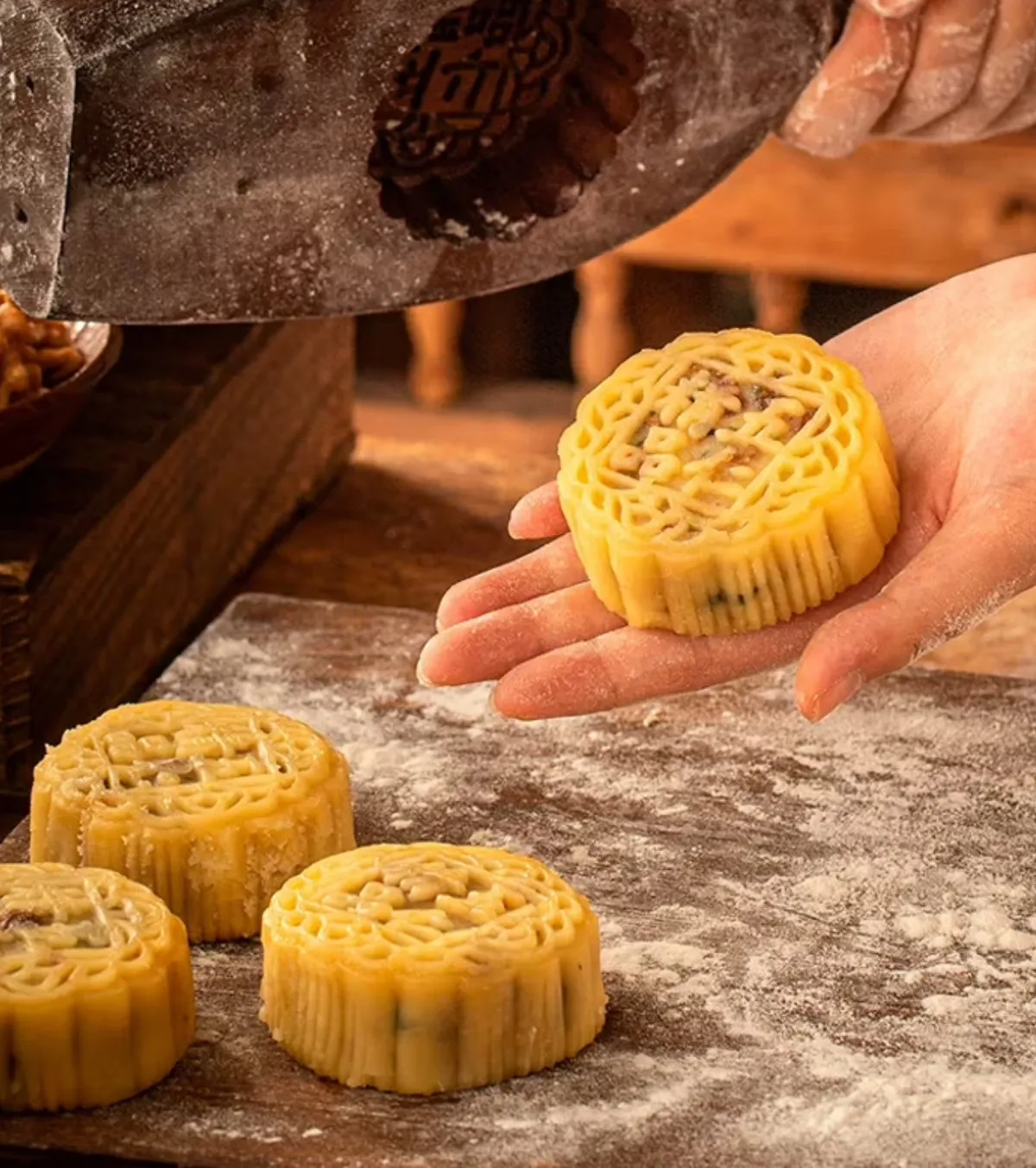
Roundness is not decoration either. The mooncake, the pomelo, the persimmon, the plate, the table, the family circle: all repeat one word, 团圆, completeness. The mooncake is best understood as a sharing instrument, not a serving. Cut it into wedges and give each person a piece, and the cake performs its old social work. A whole mooncake kept in a gift box is a package; a sliced mooncake passed around is a meal. That difference matters if we want intangible heritage revitalization to remain more than packaging. The round foods themselves — pears, chestnuts, persimmons, taro — come from the same procession the land follows; the seasonal eating framework maps each ingredient to the solar term where it peaks.
Scripts for waiting
The legends are not fairy tales told to make the night cute. They are scripts for waiting. Chang’e drinking the elixir and rising to the moon speaks of loneliness and the cost of leaving home. The jade rabbit pounding medicine in the moon speaks of healing after a hard year. Wu Gang cutting the self-healing tree speaks of work that must be done again and again. In a farming family, waiting for the moon to rise was not idle. The sky had to brighten enough for evening work, children, and elders to settle outdoors. Stories gave the waiting its meaning.
This is why Mid-Autumn should not be reduced to a single “mooncake and legend” package. The oldest layers are harvest thanksgiving and moon rites. By the Tang and Song periods, moon-viewing had become a public festival practice in towns and courts. By Ming and Qing local gazetteers, the customs were already richly regional: new rice offerings, lanterns, family dinners, duck in some places, taro and fruits in others, poems in the study, mooncakes in the kitchen. Ancient agricultural texts and folk almanacs did not treat the date as a pretty night. They treated it as a marker in the year’s labor cycle.
Mid-Autumn is also a shared East Asian moment, not a single-country package. Vietnam’s Tet Trung Thu puts lanterns, lion dances, and moon cakes for children at the center. Korea’s Chuseok, or Hangawi, foregrounds ancestral rites, visiting graves, new rice, and songpyeon half-moon rice cakes. The same lunar date bends to local crops, histories, and family forms. This localization and indigenization is not contamination; it is proof that the festival is a working timekeeping system, not a fixed national emblem.
What can go wrong? A lot. The holiday can collapse into luxury packaging, sugar-heavy mooncakes, and office gift exchanges that say more about status than season. It can become a social-media moon photo with no person beside you. It can force reunion where reunion is painful, or turn harvest gratitude into a shopping list. The round table should not become a round obligation. A festival that cannot admit fatigue, shortage, distance, or disagreement is not alive; it is only advertised.
There is another honest problem: the modern city often hides the moon and the harvest at the same time. When the sky is washed by streetlight and the food arrives in plastic, the festival can drift into nostalgia without substance. That is why public participation matters. Museums, schools, markets, and community kitchens can restore the connection by teaching the calendar through hands and mouths, not just slogans. In museum education, the best entry point is often not a lecture but a round cake cut into eight pieces.
Mid-Autumn 2026, and a working rule
For 2026, the commonly used Chinese calendar date is Friday, September 25. The astronomical full-moon instant is often listed for September 26 at 16:49 UTC. Do not let that seam confuse you. The lunar calendar names its own full-moon day; the sky keeps a different clock. The festival is about the people around the table under the moon, not the exact minute the moon is fullest. The same week holds the equinox itself — the balance you can watch happen — so sit down together, look east, and you have marked it correctly.
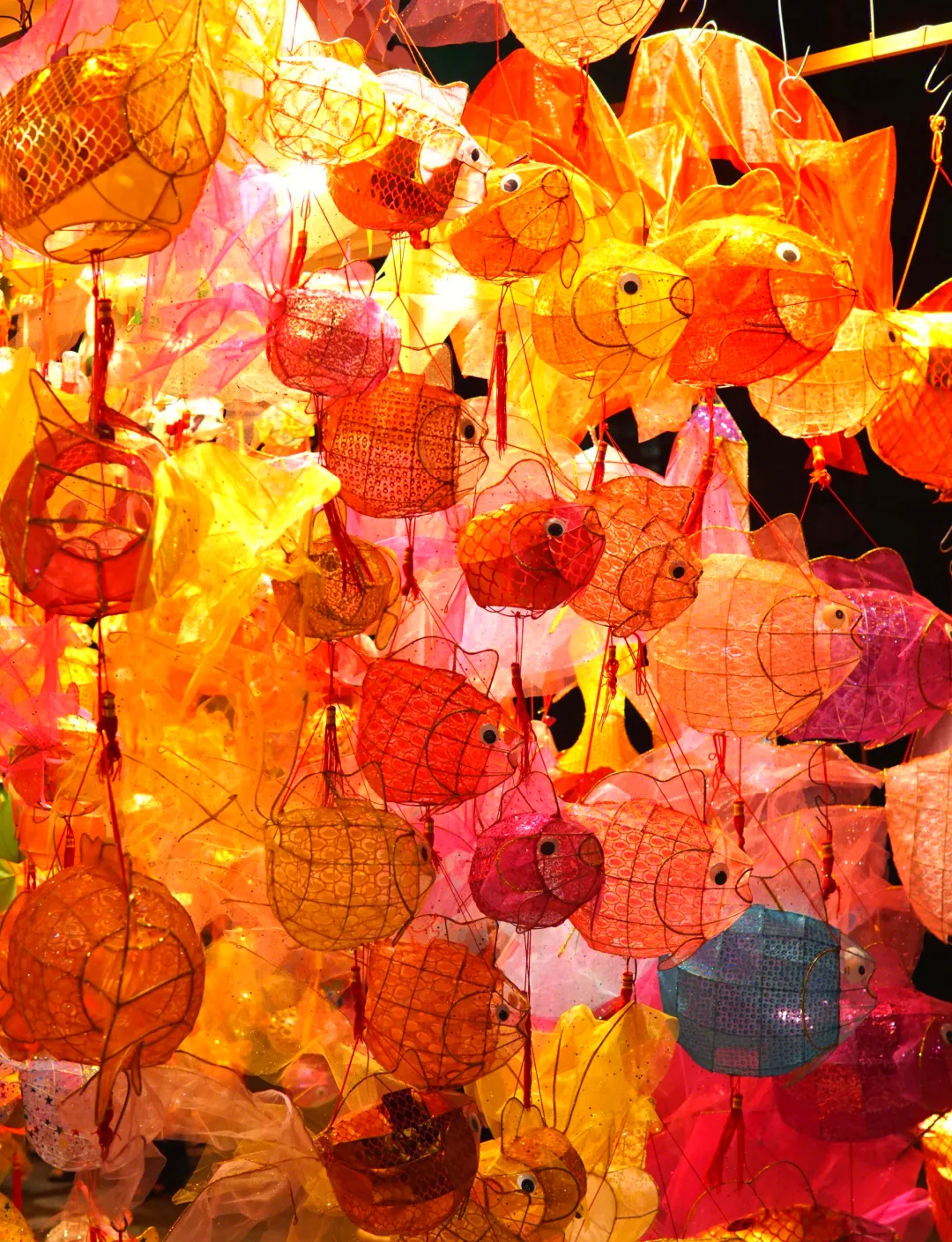
A working rule for Mid-Autumn 2026: eat something round with people you like; if you have a mooncake, cut it into wedges and share it; after sunset, face east and watch a full moon rise while the sky is still light; tell one of the stories while you wait; hang or hand a child a lantern if you want the full scene. If you are alone, make one round meal and call one person. If clouds cover the moon, use a lamp, a plate, or a window. The moon is a guide, not a gatekeeper.
If you live in the Southern Hemisphere, the same lunar date falls in spring, not harvest. Then the festival becomes a memory carried across seasons, not a field calendar. That is not a failure. It is diaspora time. The moon still rounds, the table can still share, and the story can still ask what has been grown, what has been lost, and what is worth bringing home.
This is where museum education meets daily life. The China Agricultural Museum cafeteria has experimented with solar-term dishes and themed ingredient pictures; on festival days the line grows. That small fact is encouraging because it returns culture to the mouth, the hand, and the shared table. A solar term immersive exhibition can teach the calendar’s structure, but a seasonal dish teaches its taste. The goal of heritage work is not to preserve a list. It is to make a time habit that modern people can keep.
The third quarter of the year, in this reading, is not a business quarter. It is the third turn of the farming rhythm: spring planting, summer tending, early autumn harvesting, then the moon’s evening meeting. Around Mid-Autumn, the sun is setting earlier, the dew has cooled the fields, and the equinox has already balanced day and night. The moon takes over the night shift. It lights the threshing ground, the courtyard, the balcony, the bus window. It makes the harvest visible after dark.
At the end, the festival asks a simple question: what did the year grow, and who did it grow for? The answer is not only grain. It is also the family, the neighborhood, the remembered dead, the child with a lantern, the elder who knows the proverb, the city worker who finally stops. The harvest is not complete until it is shared. The moon is not enough until it is seen together. That is the ecological wisdom of Mid-Autumn: human time rests on natural time, and natural time is honored by human company.
Frequently Asked Questions
Quick answers about mid-autumn festival: the full-moon harvest of the third quarter.
Why does Mid-Autumn Festival always fall on a full moon?
The Chinese calendar names the first day of each lunar month by the new moon, so the fifteenth day is a full moon by construction. Mid-Autumn is lunar 8/15 — the full moon of the harvest month — which is why its date always lands on the brightest night. In 2026 that is Friday, September 25, inside the same week as the autumn equinox.
Why is the mooncake shared rather than eaten whole?
The festival's core is reunion at harvest's end: the round moon, the round table, and the round mooncake echo one shape of completeness. The mooncake works as a sharing instrument, not a serving — cut into wedges and passed around, it performs its old social work. A whole mooncake kept in a gift box is just a package.
Why do the calendar date and the astronomical full moon differ?
The lunar calendar names its own full-moon day; the sky keeps a different clock. For 2026, the commonly used calendar date is September 25 while the astronomical full-moon instant is listed for September 26 at 16:49 UTC. The seam is normal — the festival is about the people around the table under the moon, not the exact minute the moon is fullest.
How should I mark Mid-Autumn 2026?
Eat something round with people you like; if you have a mooncake, cut it into wedges and share it. After sunset, face east and watch the full moon rise while the sky is still light — this is the Harvest Moon week, when the moon rises soon after sunset. Tell one of the stories while you wait, and if you are alone, make one round meal and call one person.
Related Solar Terms
Latest Articles
Recent guides and seasonal insights
From Dao of Seasons
How the Lunar Calendar Sets the Year's Seasonal Festivals
The moon's phases, not just the sun's progress, set the Chinese year's festivals: Mid-Autumn falls on lunar 8/15 — the full or harvest moon — and the lunar calendar is the second clock the calendar system reconciles with the solar terms.
Autumn Transition Guide: Reading the Six-Week Turn from Summer to Autumn
Autumn does not arrive in a day — it arrives across a six-week process spanning three solar terms: Start of Autumn (立秋), End of Heat (处暑), and White Dew (白露). Learn to read the staged signals — light first, then dew, then animal behavior — so you move with the season before the temperature ever changes.
August Vegetables: The Row-by-Row Guide to the Late-Summer Garden
A row-by-row guide to August vegetables: nightshades and sweet corn at their zenith, the cucurbit glut, the first winter squash, allium harvest and curing, and seed-saving — anchored in the solar terms Start of Autumn (立秋) and Limit of Heat (处暑).
From Our Network
Winter Warming Stews — Lamb, Congee & Tang Yuan
Winter calls for deeply warming, nourishing foods that support the body through the coldest months. These three classic recipes — lamb stew, eight-treasure congee, and tang yuan — are traditional winter solstice fare.
When Does Autumn Start? Astronomical, Meteorological, and Seasonal Dates Explained
Autumn does not have one start date. Meteorological autumn begins September 1. Astronomical autumn starts at the equinox, around September 22–23. In the 24 solar terms, autumn begins earlier, with Start of Autumn around August 7–8. Each system measures a different kind of seasonal change.
July Garden — Peak Summer Care and Harvest
July's garden demands daily attention. From deep watering strategies to succession planting, here's how to keep your garden productive through the hottest weeks of the year.
July Walking — Summer Strolls and Moonlit Rambles
Walking in July is about timing. Learn the best hours, routes, and practices for comfortable summer walking — from dawn patrols to night walks under the stars.
Solar Terms FAQ — Answers to Common Questions About All 24 Solar Terms
Comprehensive FAQ covering all 24 solar terms — what each term means, when it occurs, what foods to eat, how to practice seasonal wellness, and what natural changes to observe. Organized by season for easy browsing.
Written by The Way of Nature
Dao of Seasons is part of The Way of Nature ecosystem — a network of seasonal practice, food wisdom, and nature observation.
Meet our contributors →